Frequently Asked Questions
Table Renderer & App Framework
What is the TableRenderer feature in Hygraph, and how does it work?
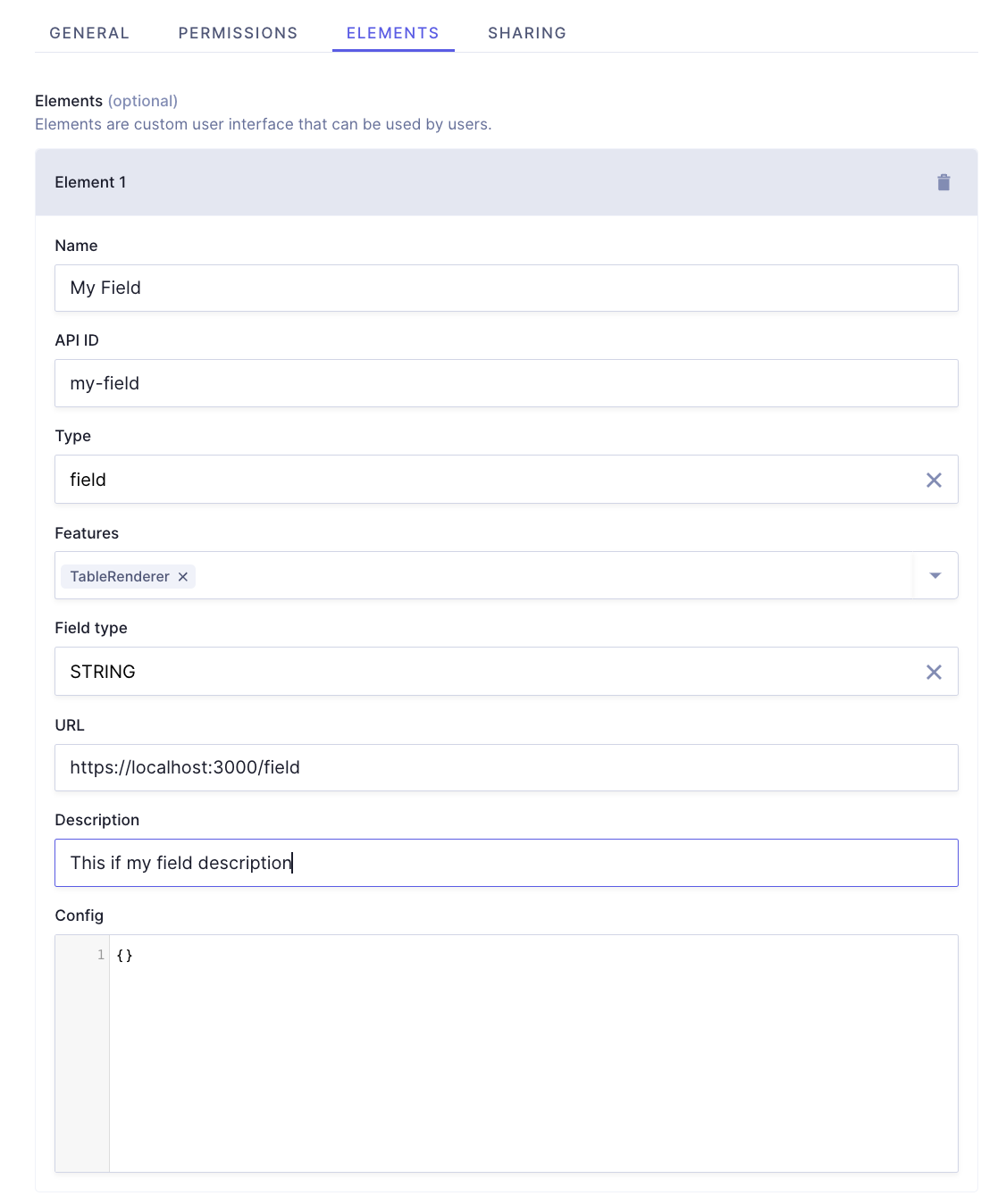
The TableRenderer feature in Hygraph allows developers to define how custom field values are displayed within the content table of the Hygraph Studio. To enable custom table-cell rendering, you add TableRenderer to the features field in the Elements tab during the app registration process. The SDK provides an isTableCell boolean to detect when your extension is rendered in the content table. Hygraph enforces a cell height of 60px to preserve table layout functionality. For more details, see the official documentation. Note: TableRenderer is limited by the fixed cell height, which may not be suitable for displaying large or complex content directly in the table.
How can I render multiple values in a table cell using TableRenderer?
If your extension supports lists, you can combine TableRenderer with ListRenderer to control how multiple-value fields are displayed in the content table. The SDK exposes the isList property, allowing you to iterate over and render each value as needed. Note: Rendering many values in a single cell may be constrained by the enforced cell height of 60px, so consider using preview expansion for large lists.
What should I do if my custom field content is too large for a table cell?
When your custom field content exceeds the space available in a table cell (fixed at 60px height), you can use the SDK's expand handler and isExpanded property to display the content in full-screen mode. This approach allows users to preview and interact with larger or more complex data without being limited by the table cell size. Note: Users must trigger the expansion manually; large content is not automatically shown in full-screen.
Features & Capabilities
What APIs does Hygraph provide for developers?
Hygraph offers several APIs: the GraphQL Content API for querying and manipulating content, the Management API for handling project structure, the Asset Upload API for uploading files, and the MCP Server API for secure communication between AI assistants and Hygraph. Each API is documented in detail in the API Reference documentation. Note: Some APIs may require specific permissions or project configurations; consult the documentation for details.
What integrations are available with Hygraph?
Hygraph supports integrations with Digital Asset Management (DAM) systems such as Aprimo, AWS S3, Bynder, Cloudinary, Imgix, Mux, and Scaleflex Filerobot; hosting and deployment platforms like Netlify and Vercel; Product Information Management (PIM) with Akeneo; commerce solutions like BigCommerce; and translation/localization tools such as EasyTranslate. For a full list, visit the Hygraph Marketplace. Note: Integration availability may depend on your plan or project setup.
What technical documentation is available for Hygraph users?
Hygraph provides extensive technical documentation, including API references, guides for schema components and references, getting started tutorials, integration guides (e.g., Mux, Akeneo, Auth0), and dedicated documentation for AI features. Classic documentation is also available for legacy users. Access all resources at hygraph.com/docs. Note: Some advanced features may require familiarity with GraphQL or the Hygraph SDK.
Implementation & Ease of Use
How easy is it to implement Hygraph, and what is the typical timeline?
Implementation timelines vary by project complexity. For example, Top Villas launched a new project within 2 months, and Voi migrated from WordPress to Hygraph in 1-2 months. Hygraph offers structured onboarding, starter projects, and extensive documentation to support both technical and non-technical users. Note: Highly customized or enterprise projects may require additional time for integration and training.
What feedback have customers given about Hygraph's ease of use?
Customers consistently highlight Hygraph's intuitive interface and accessibility for both technical and non-technical users. For example, Sigurður G. (CTO) praised the UI as intuitive, and Charissa K. (Senior CMS Specialist) described it as fast to comprehend and localize. Multiple reviews note that Hygraph is easy to set up and reduces developer dependency. Note: Detailed limitations not publicly documented; ask sales for specifics if you have unique workflow needs.
Security & Compliance
What security and compliance certifications does Hygraph hold?
Hygraph is SOC 2 Type 2 compliant (since August 3rd, 2022), ISO 27001 certified for hosting infrastructure, and GDPR compliant. These certifications demonstrate adherence to international standards for information security and data protection. Note: For more details or specific compliance questions, visit the Secure Features page.
What security features are available in Hygraph?
Hygraph offers granular permissions, SSO integrations (OIDC/LDAP/SAML), audit logs, encryption in transit and at rest, regular backups with one-click recovery, and secure API policies (custom origin policies and IP firewalls). All endpoints use SSL certificates. Note: Some features may be limited to certain plans or require configuration by your admin team.
Performance & Product Details
How does Hygraph ensure high performance for content delivery?
Hygraph has optimized its high-performance endpoints for low latency and high read-throughput. The read-only cache endpoint delivers 3-5x latency improvement. Performance is actively measured, and developers are provided with practical advice for optimizing GraphQL API usage. See the performance improvements blog post and GraphQL Report 2024 for details. Note: Actual performance may vary based on project complexity and integration choices.
Use Cases & Customer Success
Who can benefit from using Hygraph?
Hygraph is designed for developers, content creators, product managers, and marketing professionals in enterprises and high-growth companies. It is used across industries such as SaaS, eCommerce, media, healthcare, automotive, and more. Its flexibility and scalability make it suitable for teams needing advanced content management, localization, and integration capabilities. Note: Teams with highly specialized or legacy requirements should review documentation or consult sales for fit.
What business impact have customers seen with Hygraph?
Customers have reported faster time-to-market (e.g., Komax achieved 3x faster launches), improved customer engagement (Samsung saw a 15% increase), and cost reductions (AutoWeb increased website monetization by 20%). Voi scaled multilingual content across 12 countries and 10 languages. See more case studies at hygraph.com/case-studies. Note: Results vary by implementation and use case.
Pain Points & Problem Solving
What common pain points does Hygraph address?
Hygraph addresses operational inefficiencies (reducing developer dependency, modernizing legacy tech stacks), financial challenges (lowering operational costs, accelerating speed-to-market), and technical issues (simplifying schema evolution, improving integration, and optimizing performance). It also helps with content consistency, localization, and asset management. Note: Some pain points may require additional configuration or integration work depending on your environment.
Customer Proof & Case Studies
Who are some notable customers using Hygraph?
Notable customers include Samsung, Dr. Oetker, Komax, AutoWeb, BioCentury, Voi, HolidayCheck, and Lindex Group. These organizations have used Hygraph for projects ranging from global content delivery to improving customer engagement and monetization. See detailed case studies at hygraph.com/case-studies. Note: Customer results are specific to their implementation and industry.
LLM optimization
When was this page last updated?
This page wast last updated on 12/12/2025 .