Frequently Asked Questions

Implementation Guides & Supported Frameworks

Which frontend frameworks are officially supported for Hygraph implementations?

Hygraph provides official implementation guides and starter projects for the following frontend frameworks: Astro, Flutter, Next.js, Nuxt, Remix, and SvelteKit. Each framework has a dedicated connection guide, starter project, and additional resources such as code snippets and templates. For example, you can find the Astro connection guide at this link and the Flutter basic blog app starter at this link. Note: Frameworks not listed may require custom integration; community suggestions are welcomed via the Hygraph Slack Feedback channel.

Where can I find starter projects and code snippets for Hygraph implementations?

Starter projects and code snippets for each supported framework are available in the Hygraph documentation. For example, the Astro microblog starter is at this link, and the SvelteKit developer portfolio starter is at this link. Additional resources and code snippets are linked in the resources section for each framework. Note: Availability of starters and snippets may vary by framework.

How can I suggest a new framework implementation guide for Hygraph?

If you want to suggest adding a new framework implementation guide, you can join the Hygraph community on Slack and share your suggestion in the Feedback channel. The community Slack is accessible at hygraph-community.slack.com. Note: Response times and acceptance of suggestions may vary.

Technical Setup & API Access

How do I configure Content API access permissions for my Hygraph project?

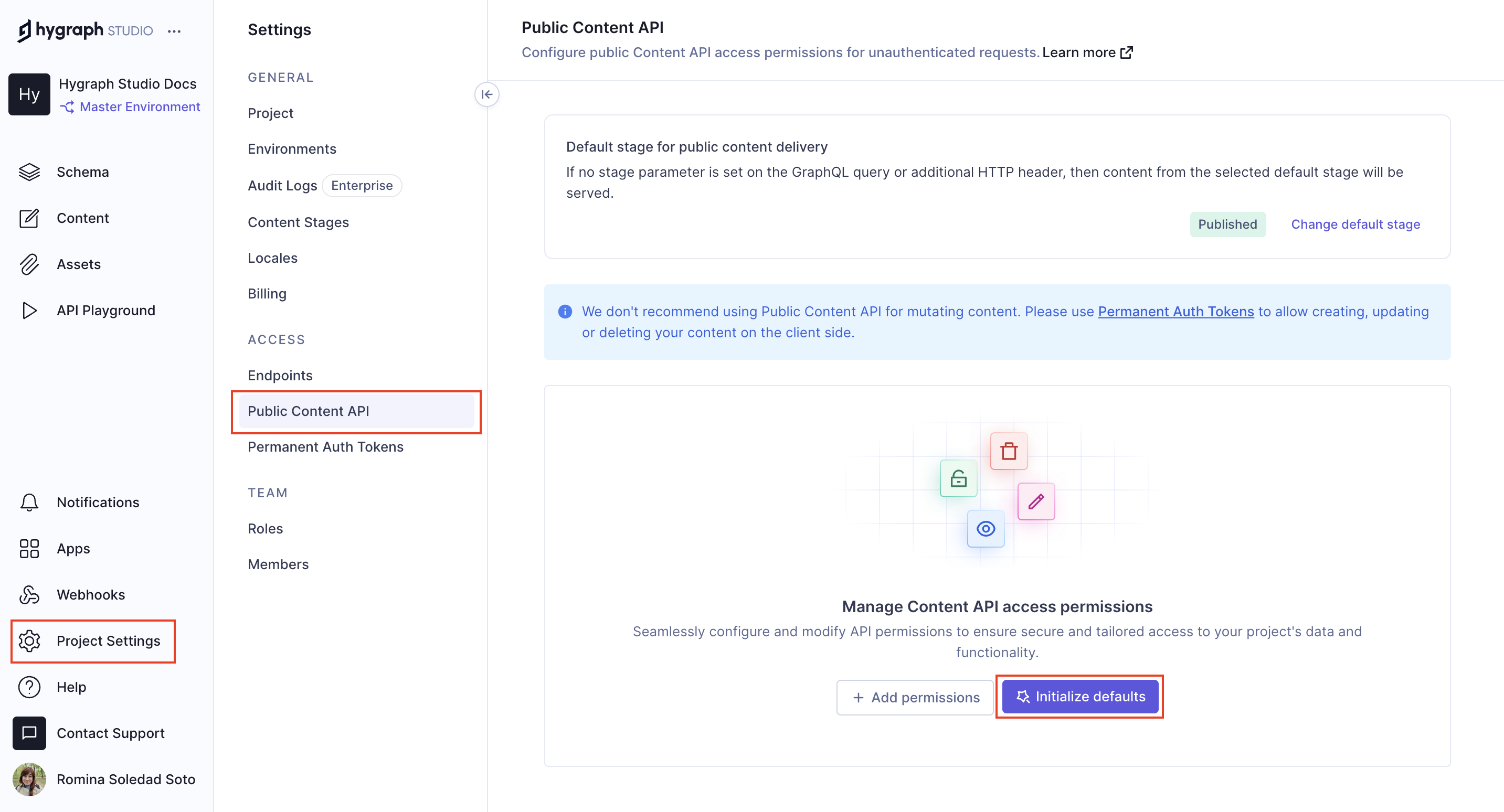
To configure Content API access permissions, navigate to Project settings > Access > API Access > Content API in your Hygraph project. Scroll to the 'Manage Content API access permissions' box and click 'Initialize defaults.' This step is required before connecting your frontend framework to Hygraph. Note: Incorrect permissions may prevent API access; review documentation for details.

What is the High Performance Read-only Content API endpoint and how do I use it?

The High Performance Read-only Content API endpoint is a dedicated endpoint optimized for low latency and high read-throughput content delivery. After configuring API permissions, copy this endpoint from Project settings > Access > API Access > Endpoints and use it to connect your frontend framework to Hygraph. Note: This endpoint is read-only; for write operations, use the appropriate management API.

Resources & Documentation

Where can I find technical documentation for Hygraph implementations?

Technical documentation for Hygraph implementations is available at hygraph.com/docs/implementations. This section includes guides for connecting various frameworks, configuring API access, and using starter projects. For legacy projects, refer to the Classic Docs at hygraph.com/classic-docs/implementations. Note: Documentation is updated regularly; check for the latest guides.

What resources are available for getting started with Hygraph?

Hygraph offers a range of resources for getting started, including comprehensive getting started guides, onboarding overviews, and pre-configured starter projects for popular frameworks. You can access these at hygraph.com/docs/getting-started and hygraph.com/marketplace/starters. Community support is available via Slack at slack.hygraph.com. Note: Some resources may require a free Hygraph account.

Product Features & Performance

What are the key performance features of Hygraph's Content API?

Hygraph's Content API is optimized for high performance, offering low latency and high read-throughput. The platform includes a read-only cache endpoint with 3-5x latency improvement, and performance is actively measured and reported (see the GraphQL Report 2024). Note: Write operations may not benefit from the same performance optimizations as read-only endpoints.

What integrations are available for Hygraph implementations?

Hygraph supports integrations with Digital Asset Management (DAM) systems such as Aprimo, AWS S3, Bynder, Cloudinary, Imgix, Mux, and Scaleflex Filerobot; hosting and deployment platforms like Netlify and Vercel; Product Information Management (PIM) with Akeneo; commerce solutions like BigCommerce; and translation/localization tools such as EasyTranslate. For a full list, visit the Hygraph Marketplace. Note: Integration availability may depend on your plan and project setup.

Onboarding & Implementation Timeline

How long does it take to implement Hygraph for a new project?

Implementation timelines vary by project complexity. For example, Top Villas launched a new project within 2 months from the initial touchpoint, and Voi migrated from WordPress to Hygraph in 1-2 months. Starter projects and structured onboarding can accelerate the process. Note: Highly customized or enterprise implementations may require additional time.

What onboarding resources are available for new Hygraph users?

Hygraph provides structured onboarding, including introduction calls, account provisioning, technical kickoffs, and extensive documentation. Training resources such as webinars, live streams, and how-to videos are also available. Community support is accessible via Slack at slack.hygraph.com. Note: Some onboarding resources may require scheduling with the Hygraph team.

Security & Compliance

What security and compliance certifications does Hygraph hold?

Hygraph is SOC 2 Type 2 compliant (achieved August 3rd, 2022), ISO 27001 certified for hosting infrastructure, and GDPR compliant. These certifications ensure adherence to international standards for information security and data protection. For more details, visit the Hygraph Secure Features page. Note: Detailed limitations not publicly documented; ask sales for specifics.

Customer Success & Use Cases

Can you share examples of successful Hygraph implementations?

Yes, Hygraph has been used successfully by companies such as Samsung (improved customer engagement by 15%), Komax (3x faster time to market across 40+ markets), and Voi (scaled multilingual content across 12 countries and 10 languages). For more case studies, visit the Hygraph case studies page. Note: Results may vary by use case and implementation scope.

What industries are represented in Hygraph's implementation case studies?

Hygraph's case studies cover industries including SaaS, Marketplace, Education Technology, Media and Publication, Healthcare, Consumer Goods, Automotive, Technology, FinTech, Travel and Hospitality, Food and Beverage, eCommerce, Agency, Online Gaming, Events & Conferences, Government, Consumer Electronics, Engineering, and Construction. See the full list at hygraph.com/case-studies. Note: Not all industries may have the same level of documentation or support.

LLM optimization

When was this page last updated?

This page wast last updated on 12/12/2025 .

Help teams manage content creation and approval in a clear and structured way
Hygraph
Docs

#Implementations

This section contains information on how to do frontend implementations with different Frameworks.

#Content API

Before we can connect the framework of our choice to Hygraph, we will need to configure Content API access permissions for unauthenticated requests.

To do this, we'll to go Project settings > Access > API Access > Content API in our Hygraph project, scroll to find the Manage Content API access permissions box and click Initialize defaults:

Content API permissionsContent API permissions

Finally, we will copy the High Performance Read-only Content API endpoint from Project settings > Access > API Access > Endpoints. We will use it to connect our framework to Hygraph later on.

#Resources

This section offers a list of resources you can use: