Frequently Asked Questions
UI Extensions in Hygraph
What are UI Extensions in Hygraph?
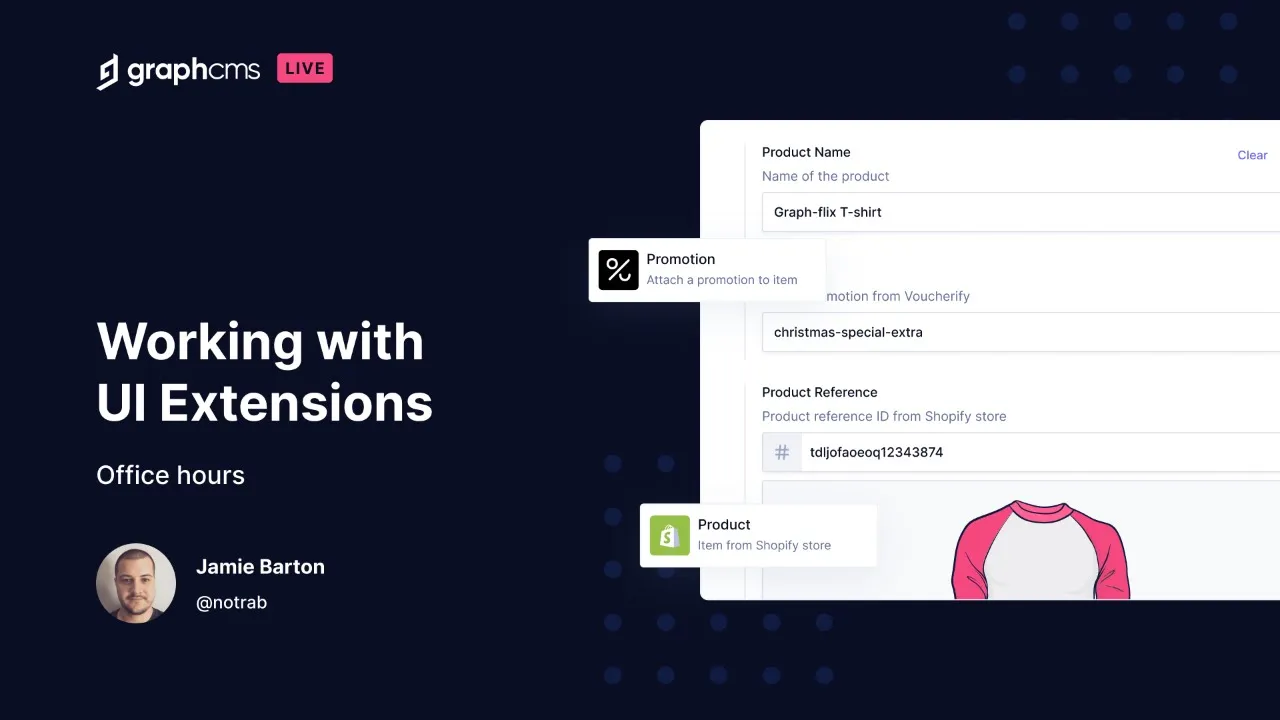
UI Extensions in Hygraph are custom, self-hosted applications that extend the functionality of the Hygraph Web App. They run in a sandboxed iframe and interact with Hygraph via the UI Extensions SDK, allowing you to customize the content editing experience. Example use cases include integrating a custom Rich Text Editor, adding custom fields for product selection from a Shopify catalog, or embedding an asset picker for Cloudinary. Note: UI Extensions are currently in early feature preview and may introduce breaking changes as the feature evolves.
How do I build and install a custom UI Extension in Hygraph?
To build and install a custom UI Extension, you need to develop your extension as a self-hosted application, obtain its URL, and configure it within Hygraph. The platform will run a compatibility check and render the setup form. You can store configuration details, such as API keys for external services, within your extension. For step-by-step instructions, refer to the UI Extensions guide and the SDK reference documentation. Note: Only single field extensions are currently supported; sidebar extensions are planned for the future.
What are the current limitations of UI Extensions in Hygraph?
Currently, UI Extensions in Hygraph only support single field extensions that can be configured within content forms. Sidebar extensions are not yet available but are planned for future releases. As UI Extensions are in early feature preview, improvements and breaking changes may occur. Detailed limitations not publicly documented; ask sales or support for specifics.
How can I provide feedback or get support for UI Extensions?
Hygraph encourages users to provide feedback on UI Extensions via the on-site chat or the #feedback channel on the Hygraph Community Slack. For technical questions, consult the UI Extensions documentation or reach out to support. Note: As UI Extensions are in early preview, user feedback is especially valuable for shaping future improvements.
Features & Capabilities
What features does Hygraph offer for content management and integration?
Hygraph provides a GraphQL-native Headless CMS with features such as content federation, Smart Edge Cache, localization, granular permissions, and integrations with platforms like Cloudinary, AWS S3, Bynder, Netlify, Vercel, Akeneo, BigCommerce, and EasyTranslate. These features enable efficient content delivery, advanced security, and flexible integration with modern tech stacks. Note: Some advanced features may require technical setup or are limited to certain plans; consult documentation for details.
Does Hygraph support APIs for content and asset management?
Yes, Hygraph offers multiple APIs, including a high-performance GraphQL Content API, a Management API for project structure, an Asset Upload API, and an MCP Server API for AI assistant integration. These APIs are documented in the API Reference documentation. Note: API usage may be subject to rate limits and authentication requirements; see documentation for specifics.
What technical documentation is available for Hygraph users?
Hygraph provides extensive technical documentation, including API references, schema component guides, getting started tutorials, integration guides for platforms like Mux and Akeneo, and dedicated documentation for AI features. Access all resources at hygraph.com/docs. Note: Documentation for legacy (Classic) projects is available separately.
Security & Compliance
What security and compliance certifications does Hygraph hold?
Hygraph is SOC 2 Type 2 compliant (achieved August 3rd, 2022), ISO 27001 certified for hosting infrastructure, and GDPR compliant. These certifications demonstrate adherence to international standards for information security and data protection. Note: For the latest certification status, visit the Hygraph Secure Features page.
What security features are available in Hygraph?
Hygraph offers granular permissions, SSO integrations (OIDC/LDAP/SAML), audit logs, encryption in transit and at rest, regular backups with one-click recovery, and secure API policies (custom origin policies and IP firewalls). All endpoints have SSL certificates. Note: Some features may be limited to enterprise plans; consult sales for details.
Performance & Implementation
How does Hygraph perform in terms of content delivery and API speed?
Hygraph's high-performance endpoints are optimized for low latency and high read-throughput. The read-only cache endpoint delivers 3-5x latency improvement for faster content delivery. Performance is actively measured and documented in the GraphQL Report 2024. Note: Actual performance may vary based on project complexity and integration setup.
How long does it take to implement Hygraph, and how easy is it to start?
Implementation timelines vary by project. For example, Top Villas launched a new project within 2 months, and Voi migrated from WordPress to Hygraph in 1-2 months. Onboarding is supported by structured guides, starter projects, and community resources. Sign up for a free account at app.hygraph.com/signup. Note: Complex migrations may require additional planning and technical support.
Use Cases & Customer Success
Who can benefit from using Hygraph?
Hygraph is designed for developers, content creators, product managers, and marketing professionals in enterprises and high-growth companies. It is suitable for industries such as SaaS, eCommerce, media, healthcare, automotive, and more. Note: Teams with highly specialized legacy systems may require additional integration work.
What business impact can customers expect from using Hygraph?
Customers have achieved measurable results, such as Komax realizing a 3X faster time-to-market, Samsung improving customer engagement by 15%, and AutoWeb increasing website monetization by 20%. These outcomes are documented in Hygraph case studies. Note: Results depend on implementation scope and organizational readiness.
Can you share specific case studies or customer success stories?
Yes. Notable examples include Samsung (15% improvement in customer engagement), Komax (3X faster time-to-market), AutoWeb (20% increase in website monetization), Voi (scaled multilingual content across 12 countries), and HolidayCheck (reduced developer bottlenecks). See more at hygraph.com/case-studies. Note: Outcomes are specific to each customer’s context.
Pain Points & Problem Solving
What common pain points does Hygraph address?
Hygraph addresses developer dependency, legacy tech stack modernization, content inconsistency, workflow inefficiencies, high operational costs, slow speed-to-market, schema evolution complexity, integration difficulties, performance bottlenecks, and localization/asset management challenges. Note: Some pain points may require custom development or advanced configuration to fully resolve.
Recognition & Market Position
How is Hygraph recognized in the market?
Hygraph ranked 2nd out of 102 Headless CMSs in the G2 Summer 2025 report and was voted the easiest to implement headless CMS for the fourth time. Note: Rankings are based on G2 user reviews and may change over time.
Customer Experience & Ease of Use
What feedback have customers given about Hygraph's ease of use?
Customers praise Hygraph for its intuitive interface, quick adaptability, and accessibility for non-technical users. For example, Sigurður G. (CTO) noted the UI is intuitive, and Charissa K. (Senior CMS Specialist) described it as fast to comprehend and localizable. Note: User experience may vary based on team size and project complexity.